
Images – Copyright Informationfrance.
Honfleur, situated between the tidal estuary of the Seine and the ” Plateau d’Auge “, welcomes you in any season. As both a sea and a river port, but also a sailing port, the city of Honfleur has preserved its rich artistic and historic heritage.With the great discoveries, Honfleur was the birthplace of numerous navigators, sailors and captains. Samuel de Champlain (born in Brouage) organised several departures from Honfleur to Canada – particularly in 1608 with the founding of Quebec.In the 17th century, Colbert ordered the town walls to be demolished and began the construction of the “Vieux Bassin”. The salt warehouses also date from this period. In the 18th century, thanks to the trade with overseas countries, the shipyard expanded rapidly.Since the 19th century, Honfleur has been the treasure of many artists including Eugène Boudin who gathered around him many fellow artists: Jonkgind, Monet and the poet Charles Baudelaire. Impressionism was born. Discover Honfleur’s famous heritage through its picturesque streets, old houses, St Leonard’s Church and St Catherine’s Church in the old maritime district with its separate belfry.
Book a Hotel in Honfleur
Rent a Chateau in Normandy

Book a Holiday Cottage in Normandy

L'Enclos
The oldest and most visited part of Honfleur lies within the area of the Hôtel de Ville, the deconsecrated church of Saint-Etienne, the remains of the old prison (nowadays, the Normandy Cultural Museum) and the original 17th century Salt Halls (Greniers à Sel), now used for exhibitions, conferences and concerts.
Saint Leonard and Sainte Catherine
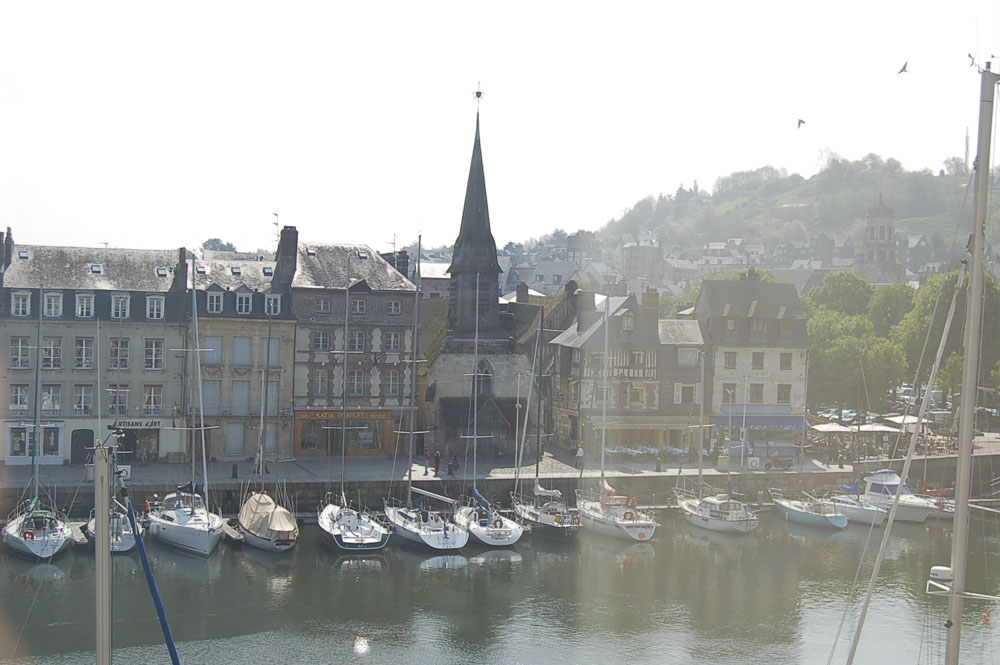
The Church of Saint-Léonard stands behind the Tourist Office and the traditional open-air wash house (lavoir) is still fed by hillside springs. The façade of the church and the first bay of the nave, date from the end of the 15th and beginning of the 16th centuries. The flamboyantly carved main entrance supports a magnificent octagonal bell-tower constructed in 1760.
The Church of Sainte Catherine. Surrounding this 15th and 16th century church are narrow cobbled streets, art galleries and traditional craft shops. This church was built by shipwrights and is the largest wooden church with a separate bell-tower in France. The bell-tower, also largely built of wood, dates from the end of the 15th century and is now a museum of religious art.
The Old Dock
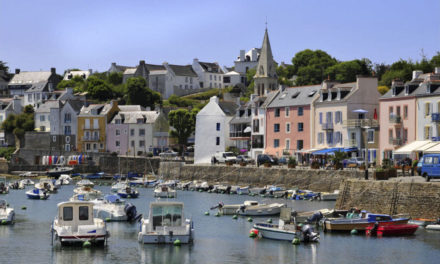
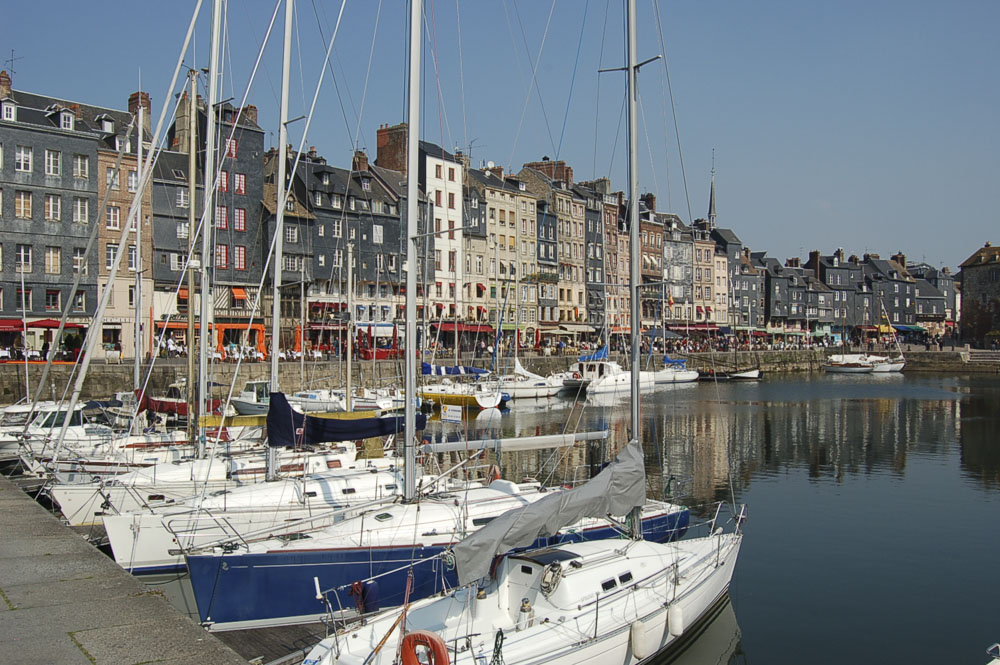
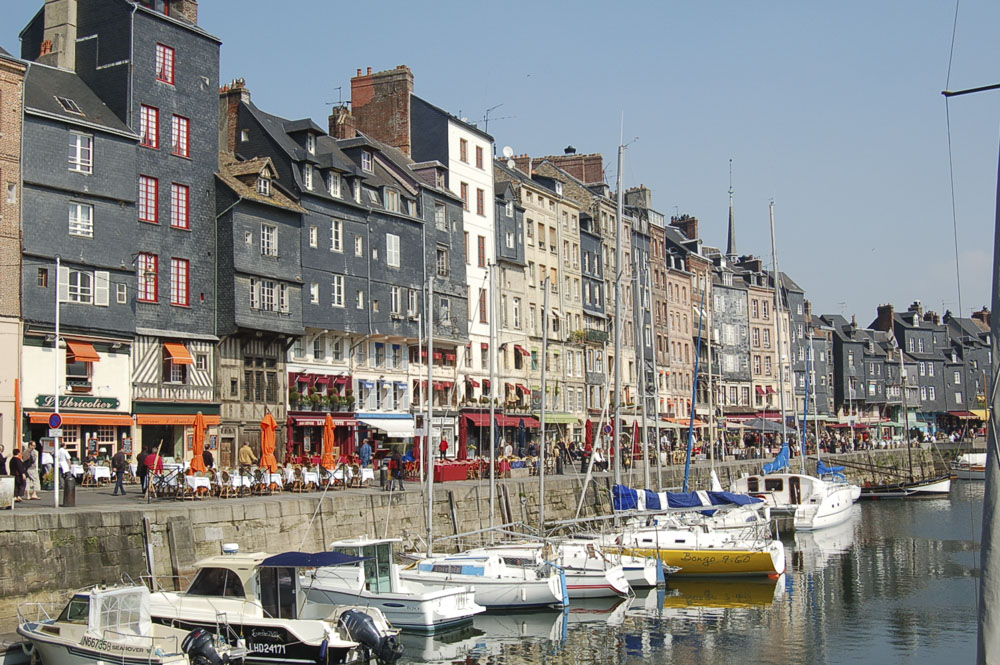
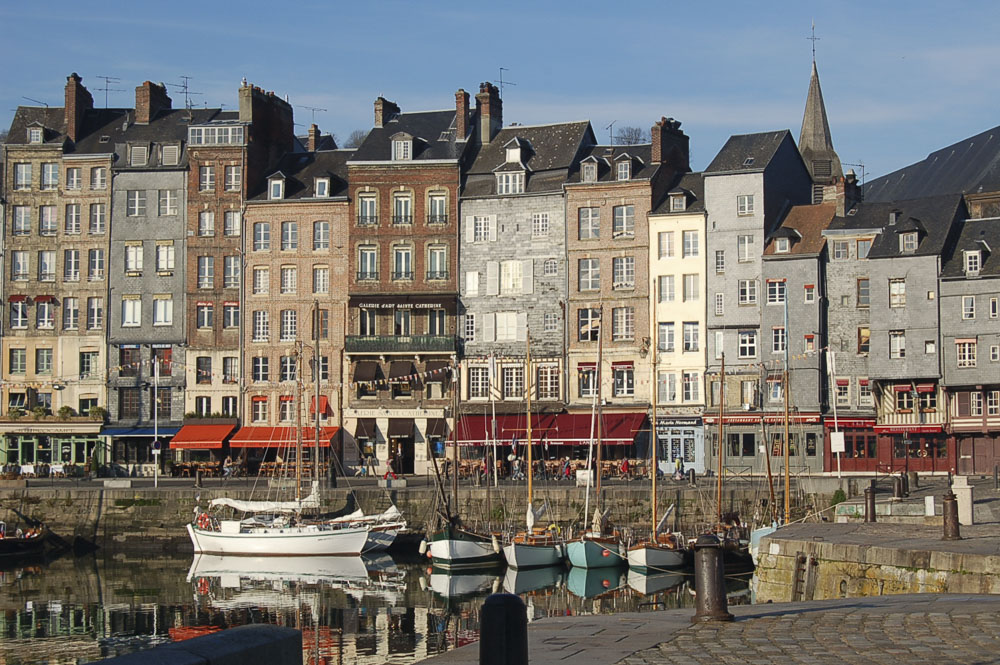
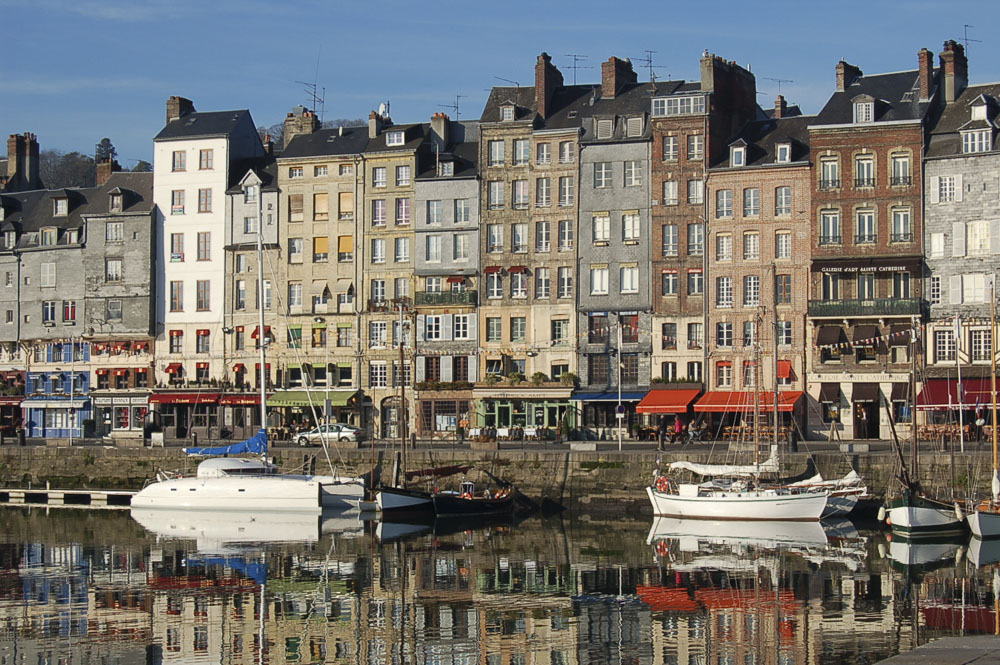
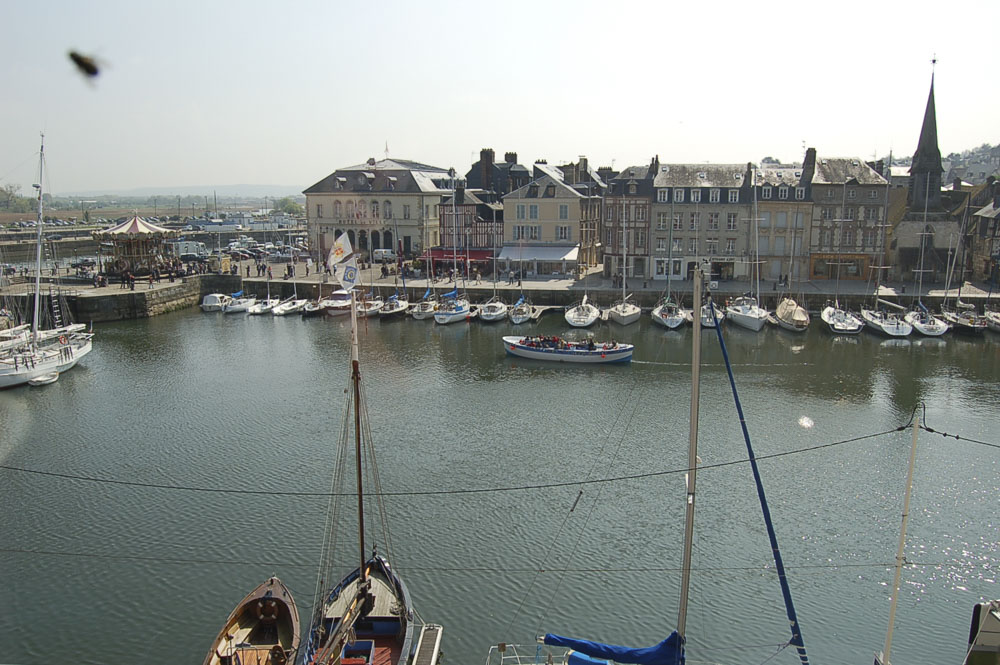
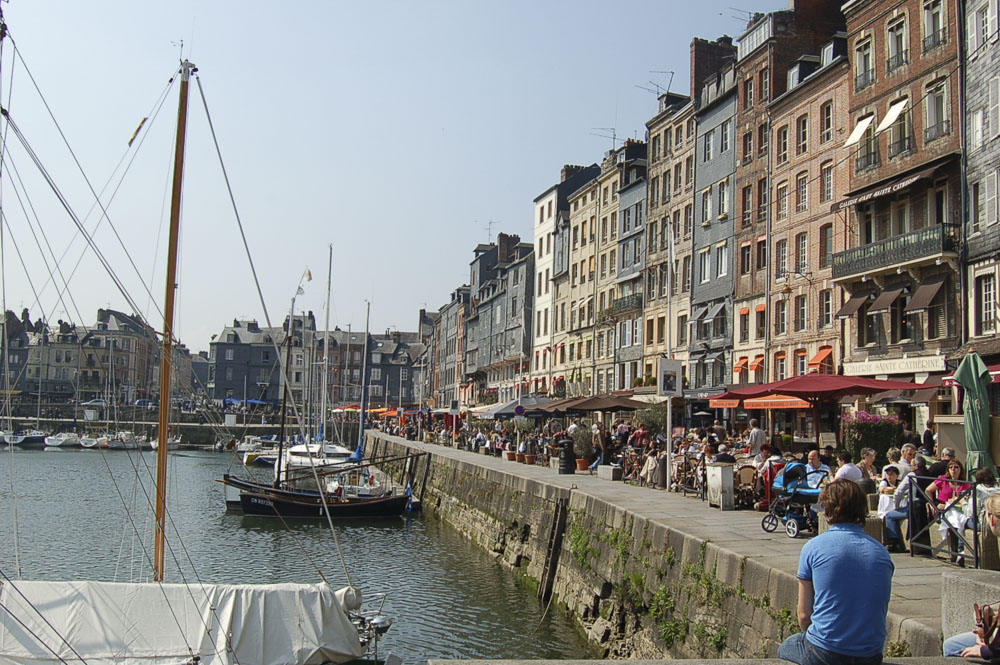
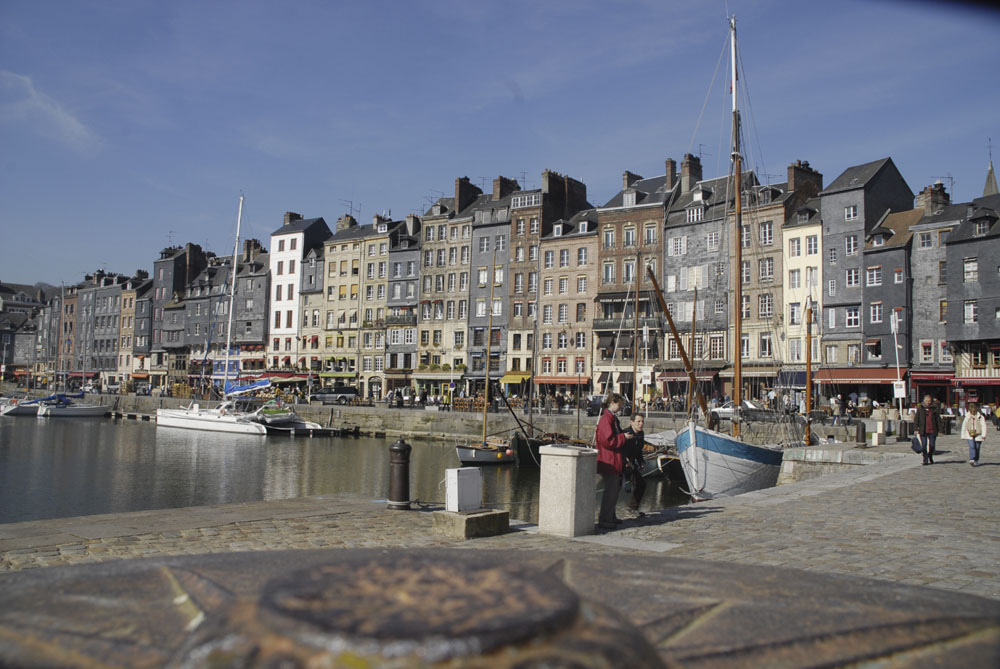
The Old Dock is surrounded by picturesque narrow houses, the Lieutenancy and St Stephen’s Church – without doubt this is what catches the eye of every visitor upon their first visit to Honfleur.
The Dock itself was built thanks to Colbert in 1681 so as to take over from the old harbour that had become far too small for the increasing needs of the town. (Colbert was Louis the 14th’s finance minister). To carry out this work, Colbert had to have the Western part of the rampart demolished.
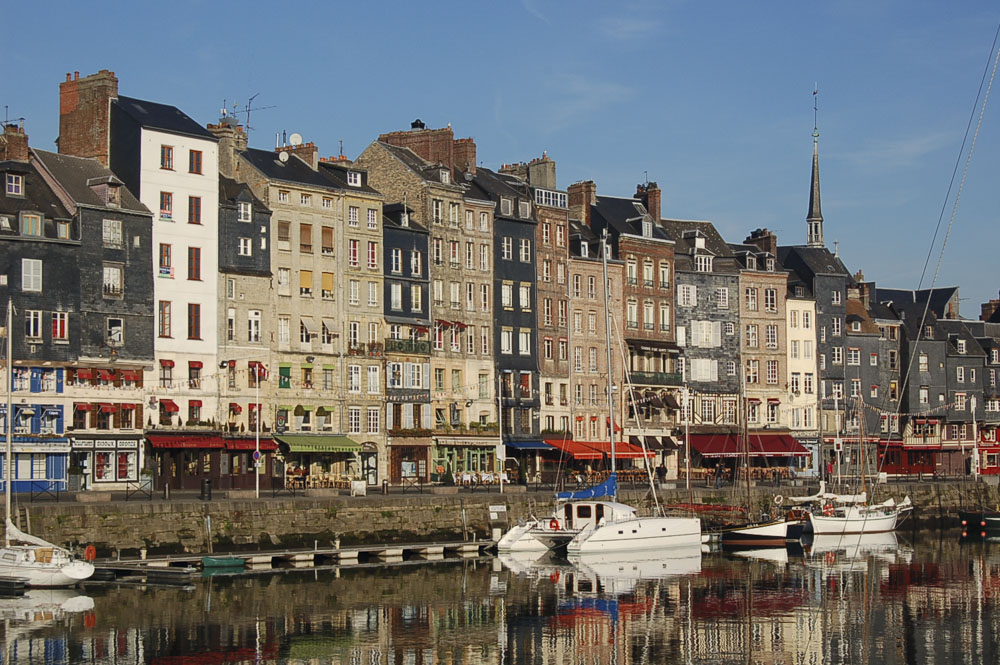
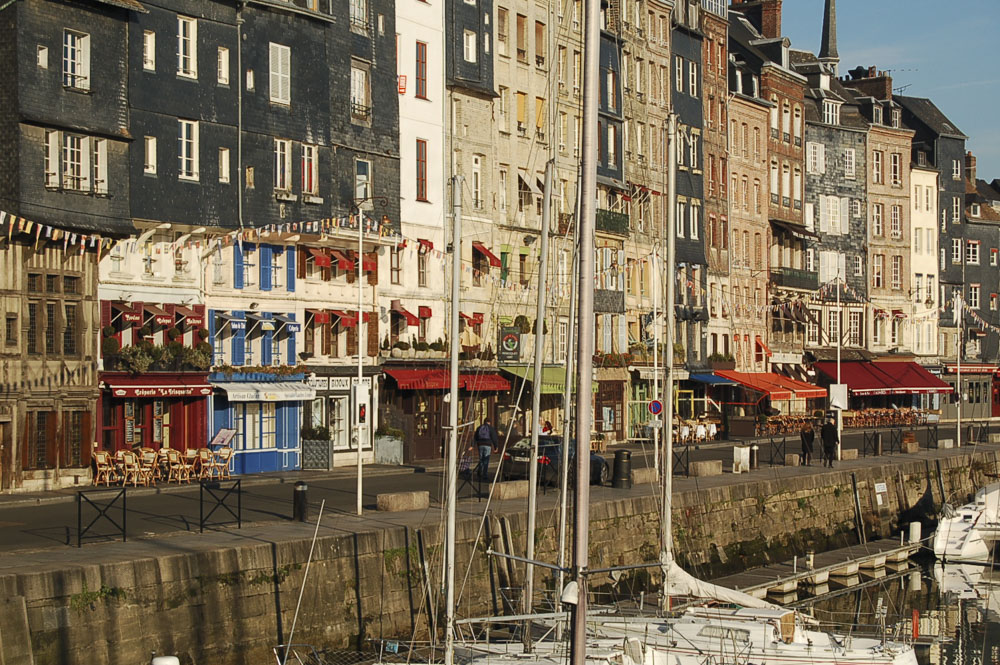
The narrow houses which are squeezed against one another on St Catherine’s quay are quite unusual. They are not only all different in size and shape, they also have two ground floors: one that opens onto the quay and another one about half way up that opens behind on to the Dauphin Street or the Logettes Street.
Because – or thanks to – this disposition, each house is privately owned by two different householders.
These houses were built between the 16th and the 18th centuries. Some of them have overhanging storeys and many have their walls protected by slates.
The Lieutenance
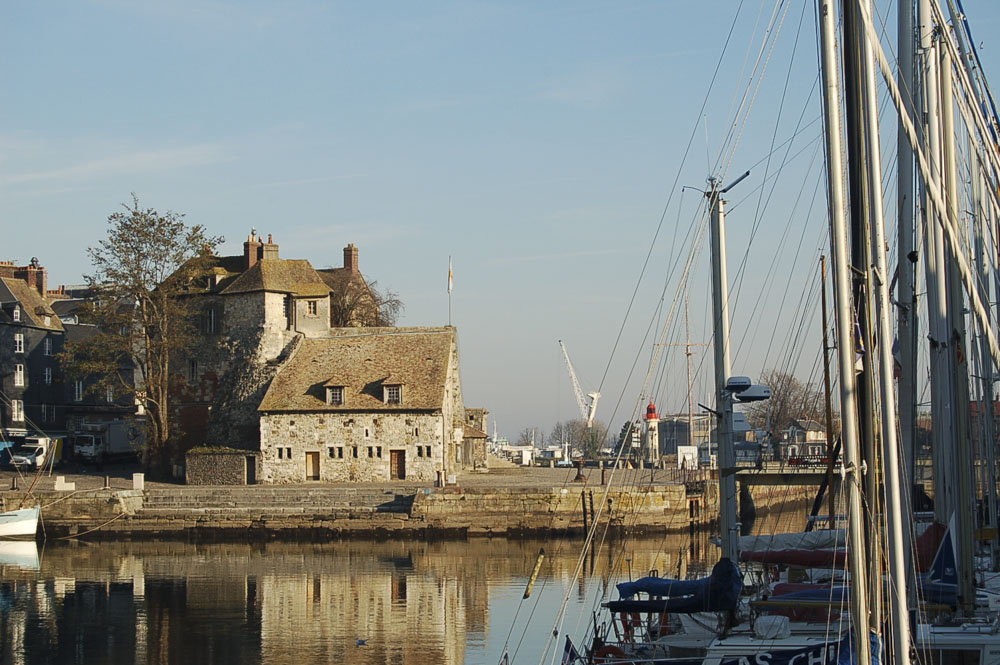
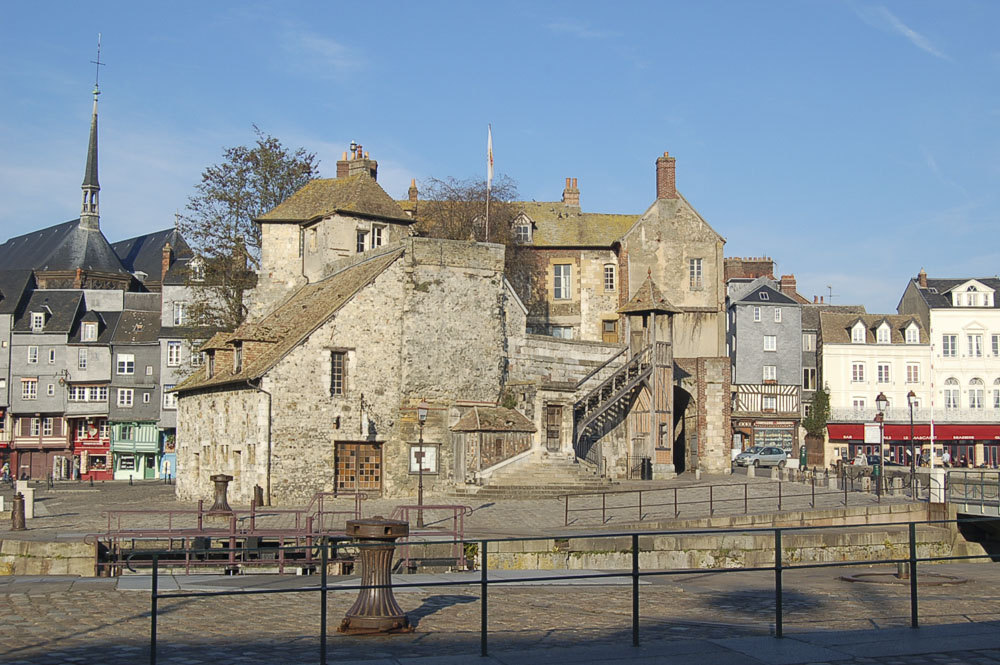
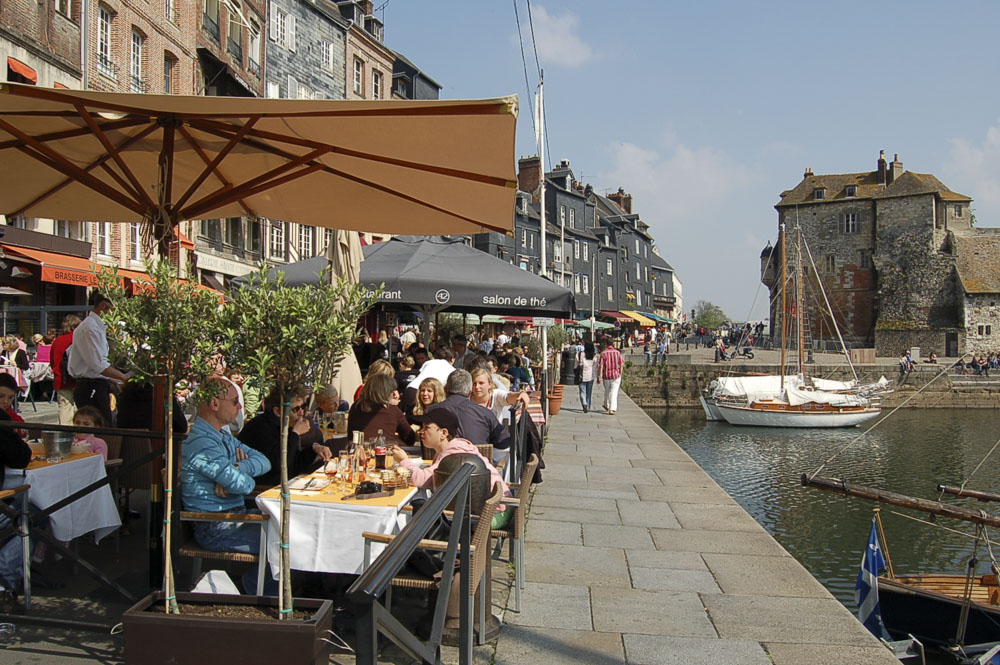
At one end of the Old Dock stands an odd-looking stone building called the Lieutenancy. This name refers to the 17th century when the King’s Lieutenant used this building as his place of residence. It is, however, the only remnant left from the ancient rampart largely altered during the 16th and the 17th centuries. These past alterations make it very difficult nowadays for us to recognise the fortified “Caen Gate” which used to control the entrance into the medieval fortress of Honfleur. Nonetheless, parts of the walls that protected the town can still be seen on the Lieutenance.
The gateway itself dates back to the 17th century. Above the gate, inside a niche, is a statue of Our Lady of the Harbour.
Two overhanging watch-turrets at the sides are decorated with the town’s coat of arms. A drawbridge used to link the fortress with Saint Catherine’s suburb, the sailor’s district set outside the town’s boundaries. To the North, a crenellated bastion defended this fortified gate. To prevent any boat from getting into the Old Dock at night, chains were drawn across the entrance between the Lieutenancy and a Tower built opposite the present bridge. This Tower was demolished in 1808.
The Cote de Grace and Normandy Bridge
From the Côte de Grâce, the hill some 1,5 km from the town centre, are spectacular views of the Seine estuary, the harbour and Le Havre. Nearby is one of the region’s oldest sanctuary chapels, Notre Dame de Grâce, founded by Richard II and rebuilt between 1600 and 1615.
The Mont Joli is a continuation of the Côte de Grâce and provides a magnificent view of the Pont de Normandie (largest bridge of its kind in Europe with a central span of 856 m) and the Seine Valley.
Travel & Tourist Office
By Car
Book your crossing now with Eurotunnel –
Distance from Coquelles – 3 hours – 272 Kms (Approx)
Office de Tourisme de Honfleur
Quai Lepaulmier – 14600 Honfleur
Tél. : 02.31.89.23.30 – Fax : 02.31.89.31.82
Copyright photographs : M Lomdard/D Valade/OT de Honfleur
Copyright text : OT de Honfleur